Hugo Foster · 13 September 2026
Navigating Subtle Shifts in Online Community Resilience After Platform Transitions
Understanding Platform Transitions in Digital Spaces
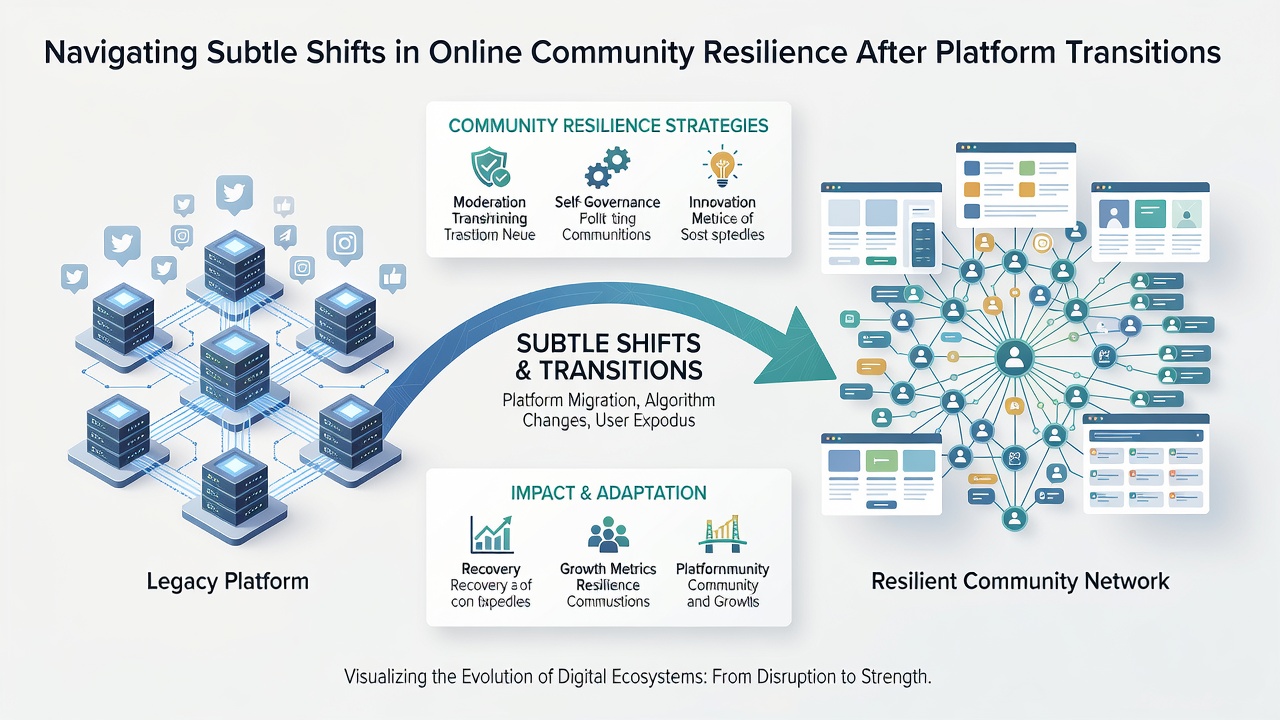
Platform transitions occur when services undergo ownership changes, policy updates, or technical migrations that prompt users to reassess their participation, and these events often reveal underlying patterns in how groups maintain cohesion over time. Data from multiple studies shows that communities rarely dissolve outright but instead experience gradual adjustments in participation levels, content moderation approaches, and connection methods that unfold across weeks or months. Researchers have documented cases where forums shifted from one hosting provider to another, resulting in temporary dips in activity followed by stabilization as members rebuilt familiar interaction routines.
Observers note that resilience emerges through existing social ties rather than new features alone, since long-standing relationships allow groups to carry norms and knowledge across different environments. Figures released in September 2026 by the European Commission highlighted how digital service regulations influenced transition outcomes across member states, with communities demonstrating varied recovery speeds based on prior organizational structures. Those who've tracked these patterns find that smaller, tightly knit groups often adapt faster than large diffuse ones because decision-making stays centralized among core participants.
Key Factors Influencing Community Adaptation
Moderation tools and communication channels play central roles during transitions, yet their effectiveness depends on how well communities already coordinate internally. Studies from the OECD indicate that groups with established off-platform contact methods maintain higher retention rates after major changes, while those reliant solely on the original platform see sharper drops in engagement. What's interesting is how subtle shifts appear in content tone and frequency before visible migration begins, serving as early indicators that members are testing alternatives or archiving materials elsewhere.
Take one researcher who examined migration patterns after a popular discussion site updated its terms in 2024 and found that communities using shared documents and external calendars recovered participation levels within eight weeks, whereas others without such backups required additional months. Data shows regulatory environments also shape outcomes, since rules around data portability in regions like the EU and Canada give users more options for preserving histories during shifts. Industry reports from the Interactive Advertising Bureau further reveal that advertising policy changes often trigger transitions, prompting groups to seek platforms with different monetization approaches that align better with their values.
Observed Patterns Across Different Community Types
Academic analyses from institutions including the University of Melbourne have tracked how hobbyist groups, professional networks, and support communities respond differently to the same platform events. Hobby groups frequently rebuild around new creative tools that emerge post-transition, while professional networks prioritize verifiable archives and access controls to sustain credibility. Evidence suggests that September 2026 marked a notable period when several enterprise platforms introduced compliance updates, leading communities in regulated sectors to accelerate their contingency planning.
People who've studied these dynamics point to network density as a predictor of long-term stability, since dense connections enable rapid information sharing about new locations and rules. But here's the thing: even dense networks face challenges when key moderators depart during transitions, creating temporary voids that slow collective decision-making until replacements step forward. Reports from Australia's eSafety Commissioner document similar trends in regional online spaces, where cultural factors influence how quickly groups establish new governance models after platform disruptions.
Strategies That Support Sustained Resilience
Communities that prepare distributed leadership structures before transitions occur show stronger continuity in activities and discussions according to multiple longitudinal studies. Preparation includes documenting processes, maintaining member directories outside the primary platform, and testing alternative spaces in advance. Research indicates these steps reduce the time needed to restore normal interaction levels, though they require ongoing effort that not all groups prioritize equally.
One study revealed that hybrid approaches combining on-platform and external resources yield the most consistent results across different transition scenarios. Those who've examined recovery timelines emphasize that transparency about changes helps maintain trust, which in turn supports continued participation even when features differ between old and new environments. Government data from Statistics Canada aligns with these findings, showing measurable differences in community persistence based on pre-transition preparation levels.
Conclusion
Platform transitions continue to test online communities through incremental changes rather than sudden collapses, and available evidence demonstrates that resilience stems from established relationships, preparation, and adaptable coordination methods. Data collected through 2026 underscores how regulatory frameworks and prior organizational habits shape recovery trajectories across regions and community types. Observers continue to monitor these developments as platforms evolve, providing further opportunities to understand the mechanisms that allow groups to persist through structural shifts.